


Main Island Hubs
ISLAND guide
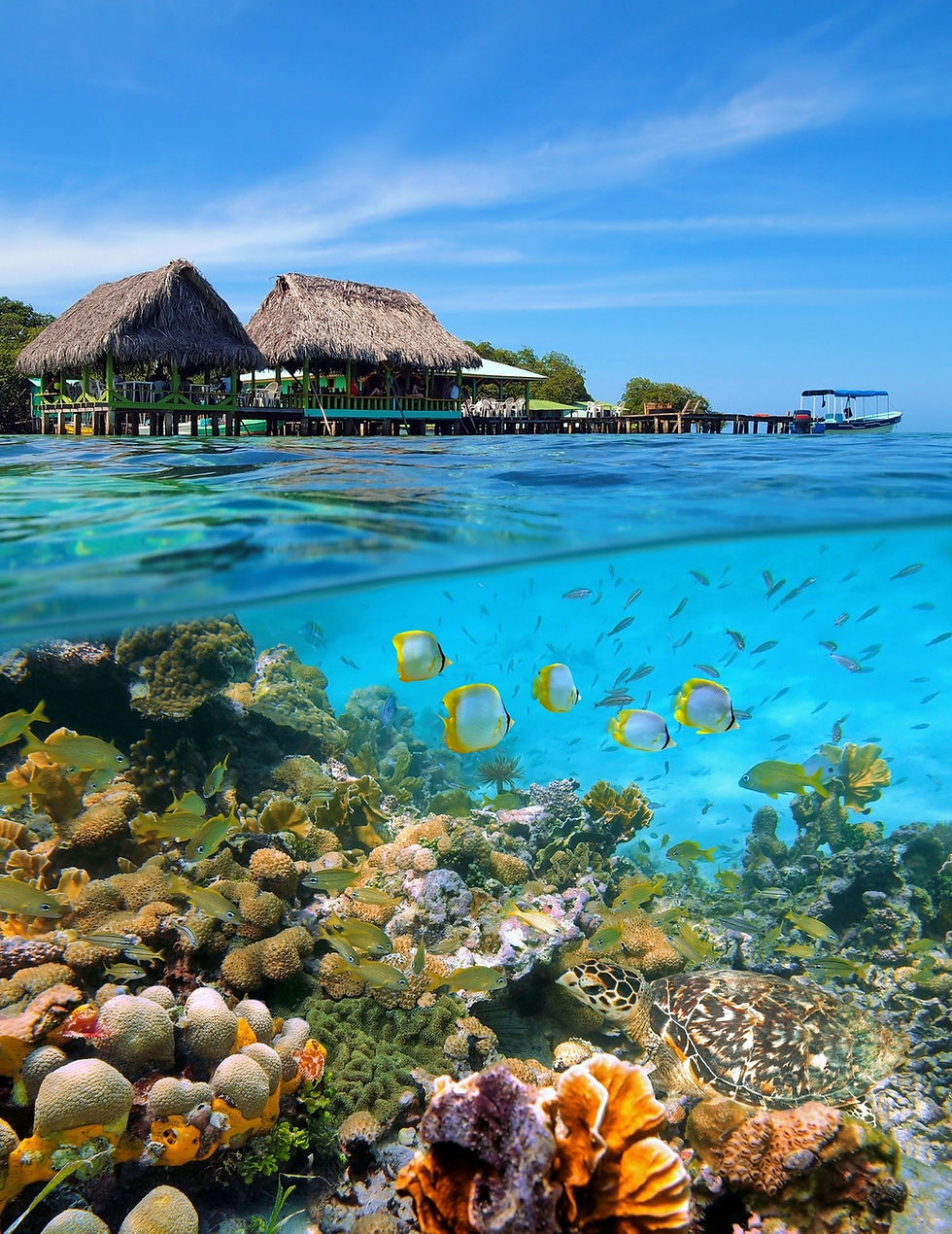
Bocas del Toro is home to some of the most stunning and diverse beaches in the Caribbean. Whether you are looking to spot vibrant marine life in the calm waters of Starfish Beach, catch world-class waves at Bluff Beach, or escape to the pristine, uninhabited shores of Cayos Zapatilla, this Panamanian archipelago has a perfect stretch of sand for every traveler. Visitors can dive into crystal-clear waters, explore lush coastal rainforests, and experience the unforgettable, laid-back island vibe of Bocas.
Coral Reefs in Bocas
BEST FOR SNORKELING
Escudo de Veraguas: Crystal clear waters and pristine remote reefs.
Isla Bastimentos (Crawl Cay): Vibrant coral gardens perfect for spotting marine life.
Relaxing Beach Time
BEST FOR CALM SWIMMING
Isla Colón: Sheltered bays with zero wave action.
Isla Carenero: Placid channel waters just a short boat ride away.
Begginer & Pro Surfing
BEST FOR SURFING
Isla Colón: Consistent reef breaks and punchy A-frames for all skill levels.
Isla Bastimentos: Heavy, world-class waves for experienced surfers.
Nature Explorers
BEST FOR HIKING
Isla Bastimentos (Red Frog): Lush coastal rainforest paths and expansive jungle trails.
Darklands: Dense mainland rainforest networks perfect for immersive jungle trekking.
Tropical Rainforest
BEST FOR WILDLIFE
Isla Bastimentos: Ideal for spotting native red dart frogs, sloths, and nesting sea turtles.
Isla San Cristóbal: Home to resident pods of bottlenose dolphins in the surrounding bays.
A birding hotspot
BEST FOR BIRDWATCHING
Bird Island (Isla Pájaros): A rocky sanctuary for red-billed tropicbirds and marine nests.
Darklands: Dense mainland rainforest perfect for spotting exotic tropical species.


Remote Prehistoric Island
Escudo de Veraguas
Escudo de Veraguas is a remote, 3.4-square-kilometer isolated island situated 32 kilometers offshore in the Gulf of the Mosquitos. Isolated from the mainland for nearly 9,000 years, Escudo evolved in complete biological isolation, producing spectacular evolutionary dwarfism. It is the sole habitat on Earth of the critically endangered Pygmy Three-Toed Sloth (Bradypus pygmaeus)—a creature 40% smaller than its mainland relatives. Ringed by dramatic limestone sea cliffs, natural arches, and glowing turquoise lagoons, Escudo resembles a lost prehistoric paradise.
Key Districts, Bays & Sectors
Limestone Sea Arches & Caverns Prehistoric wave-carved stone cathedrals rising straight out of turquoise oceanic waters.
Pygmy Sloth Mangrove Reserve Dwarf red mangrove forests where the world's last remaining ~100 pygmy sloths reside under strict protection.
Untouched Offshore Barrier Reefs Pristine oceanic coral pinnacles frequented
Key Experiences
The only place on Earth to observe the critically endangered Pygmy -Three-Toed Sloth (Bradypus pygmaeus)
Dramatic geological sea arches, secret sea caves, and limestone canyons.
Crystal turquoise offshore water with visibility frequently exceeding 30 meters
Total isolation zero permanent settlements, zero electricity, total wilderness
Nature Photography
Intrepid Luxury Explorer



OUR ISLAND
IN NUMBERS
Bocas del Toro is a scattered mosaic of land and culture. From its major populated landmasses to hundreds of tiny uninhabited outcrops, the true shape of our archipelago is revealed through these key figures.
Main Islands
9
Major Cays
52
Native Cultures
3
Tiny Islets
+200

BOCAS DEL TORO GUIDE
common questions
Isla Colón and Isla Carenero are top choices for surfing, hosting famous breaks like Bluff Beach (experts) and Carenero Point. For calm swimming, head to the sheltered waters of Isla Colón's Starfish Beach or the pristine Cayos Zapatilla.
Hospital Point off Isla Solarte and Coral Cay are excellent spots. The protected waters around the Cayos Zapatilla and Isla Bastimentos National Marine Park also offer vibrant coral gardens teeming with reef fish and nurse sharks.
The islands are heavily populated with three-toed sloths, howler monkeys, and the famous strawberry poison-dart frogs (especially on Isla Bastimentos). You can also spot tropical birds, green iguanas, and various bat species in the jungle canopies.
The primary mode of transportation is by water taxi (locally called pangas). You can easily catch these small motorized boats from the main docks in Bocas Town on Isla Colón to reach Isla Carenero, Isla Bastimentos, and other surrounding islands for a few dollars.
Yes. While hiking is popular on the jungle trails of Isla Bastimentos, the best way to explore the intricate mangrove forests of Isla Solarte, Isla San Cristóbal, and Isla Popa is by kayaking or stand-up paddleboarding through their calm channels.
Yes, there is a short, flat trail that winds through the jungle along the coastline from Boca del Drago to Starfish Beach, which takes about 15 minutes to walk. You can also hike the beach at Red Frog Beach or explore the protected mangrove forests within Bastimentos Island National Marine Park.